
Power outages in Anne Arundel County are not a matter of if — they’re a matter of when. Severn and the surrounding communities sit in a region that sees nor’easters, summer thunderstorms, hurricane remnants, and ice storms that regularly knock out power for hours, sometimes days at a time. For most of the past century, homeowners simply waited it out. Increasingly, Severn residents are deciding they’re done waiting — and a whole home generator is how they’re doing it.
Here’s what you need to know about whole home generators, why demand has grown so significantly in this area, and how to figure out whether one is the right investment for your home.
Why Power Outages Are a Serious Problem in Severn
Severn is a largely residential community in the heart of Anne Arundel County, with a mix of established neighborhoods, newer developments, and a significant number of homes that depend on well pumps for their water supply. That last point matters more than most people initially realize — when the power goes out, a well pump stops working. No electricity means no water. No water means no toilets, no showers, no ability to cook or clean. For families on well water, a power outage isn’t just an inconvenience, it’s a full household shutdown.
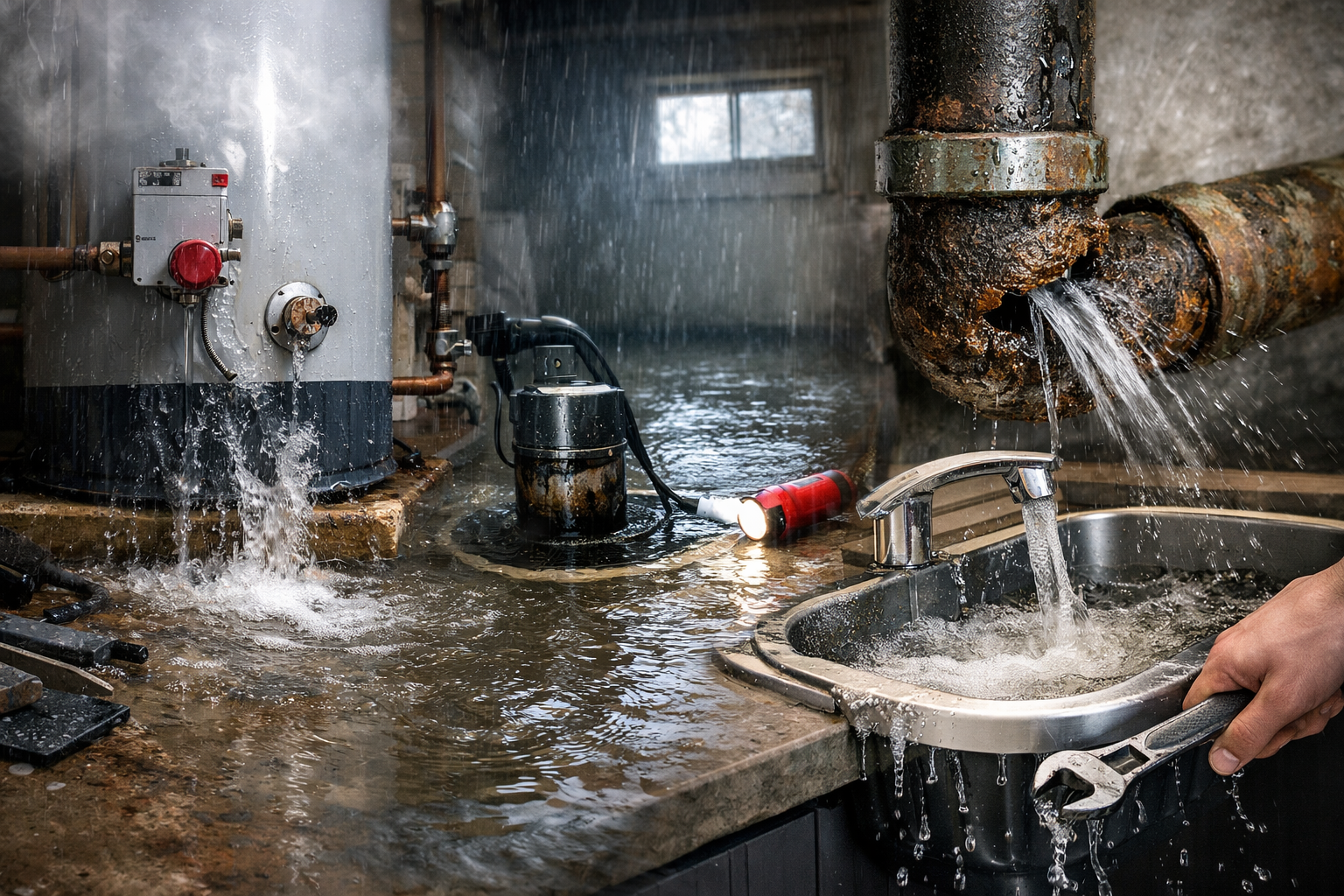
Beyond well water, consider everything else in a modern home that stops functioning without power. Heating and cooling systems go down — a serious concern during a winter ice storm or a summer heat event for vulnerable family members. Refrigerators and freezers holding hundreds of dollars of food begin to warm. Medical equipment that depends on electricity becomes unavailable. Sump pumps — critical in Anne Arundel County’s flood-prone terrain — stop running precisely when they’re needed most, during the heavy rain events that so often accompany the storms that cause outages in the first place.
The BGE service territory that covers Severn and Anne Arundel County has seen repeated large-scale outage events in recent years. Restoration times have ranged from a few hours to several days depending on storm severity and the number of affected customers. A whole home generator eliminates the dependency entirely.
What a Whole Home Generator Actually Does
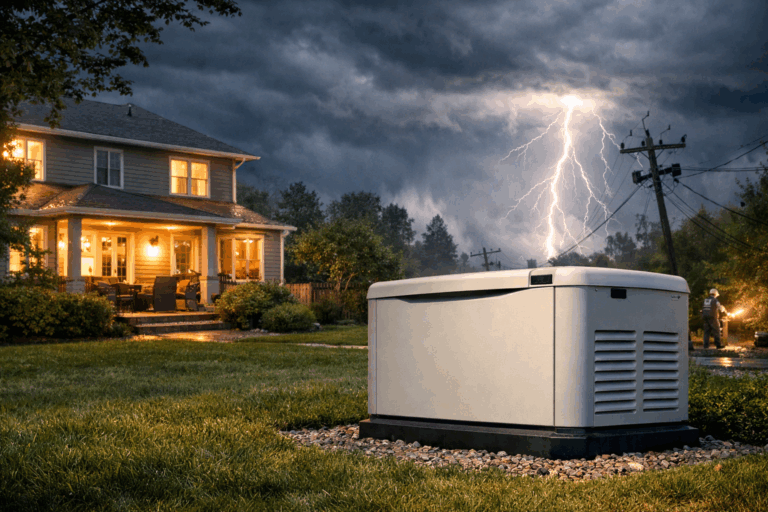
A whole home standby generator — as opposed to a portable generator — is a permanently installed unit that sits outside your home, connected directly to your electrical panel and your fuel supply. When grid power goes out, the generator detects the interruption automatically and starts within seconds, restoring power to your home without any action required on your part.
You don’t have to be home. You don’t have to run an extension cord. You don’t have to go outside in a storm to start an engine. The system handles it entirely on its own — and shuts itself off automatically when grid power is restored.
Scardina Home Services is an official Generac dealer and installer, and Generac is the leading manufacturer of home standby generators in the United States. Generac units are designed specifically for residential standby applications, are engineered for reliability in exactly the kind of weather events that cause outages in Maryland, and come with manufacturer warranties backed by a nationwide dealer network.
Whole Home Generator vs. Portable Generator: Understanding the Difference
Many Severn homeowners already own a portable generator — the kind you pull out of the garage, fill with gasoline, and run outside when the power goes out. Portable generators have their place, but they come with significant limitations that whole home standby systems simply don’t have.
Fuel. Portable generators run on gasoline, which means you need to have an adequate supply on hand before a storm hits. During a major outage event, gas stations run out quickly. A whole home standby generator connects to your existing natural gas or propane supply — fuel that is already there and doesn’t run out the way a gas can does.
Operation. A portable generator requires someone to physically start it, connect appliances via extension cords or a manual transfer switch, monitor it, refuel it, and shut it down. A whole home standby system does all of this automatically without any intervention.
Power capacity. Portable generators typically power a few select appliances at a time. A properly sized whole home standby generator powers your entire house — HVAC system, well pump, sump pump, refrigerator, lights, medical equipment, and everything else — simultaneously and seamlessly.
Carbon monoxide risk. Portable generators must be operated outdoors and at a safe distance from the home due to carbon monoxide emissions. Every year people are seriously injured or killed by improperly used portable generators. Whole home standby generators are installed in a fixed outdoor location with proper clearances by a licensed professional — the safety considerations are built into the installation.
Convenience during an extended outage. A portable generator is manageable for a few hours. After 24, 48, or 72 hours of an extended outage — the kind Anne Arundel County has experienced after major storms — the manual operation of a portable generator becomes exhausting and stressful. A standby system runs continuously and automatically for as long as needed.
What Size Generator Does a Severn Home Need?
Sizing is one of the most important decisions in the generator selection process, and it’s one where professional guidance matters. An undersized generator won’t power everything you need. An oversized one costs more than necessary. The right size depends on your home’s square footage, your electrical load, your fuel source, and which systems and appliances are priorities for you during an outage.
As a general framework for Severn homeowners:
Essential circuits only. If your priority is keeping the refrigerator, a few lights, your well pump, sump pump, and basic outlets running, a smaller generator in the 10 to 16 kilowatt range may be sufficient for a modest to mid-sized home.
Whole home coverage including HVAC. For a typical Severn home that wants to maintain full comfort — heating and cooling, all appliances, well pump, sump pump, and the full electrical load — a generator in the 20 to 22 kilowatt range is a common recommendation.
Larger homes or homes with higher electrical demands. Homes with larger square footage, multiple HVAC systems, electric vehicle charging, or other high-draw equipment may require units in the 24 kilowatt range or above.
A Scardina technician performs a load calculation specific to your home before recommending a unit size — not a generic recommendation based on square footage alone. Getting the sizing right from the start ensures the system performs exactly as expected when you need it most.
The Installation Process: What to Expect
A whole home generator installation involves several components working together, and it’s not a DIY project. Here’s what the process looks like when Scardina handles it for a Severn homeowner:
Site assessment. A technician visits your home to evaluate the best placement for the generator, assess your electrical panel, confirm your fuel source and supply line, and gather the information needed to size the system correctly.
Permitting. Generator installations require permits in Anne Arundel County. Scardina handles the permitting process so you don’t have to navigate county requirements on your own.
Installation. The generator unit is placed on a concrete pad outside the home, connected to the fuel supply — natural gas line or propane tank — and wired into your electrical panel via an automatic transfer switch. The transfer switch is the component that detects a power outage and automatically switches the home’s electrical load from the grid to the generator.
Testing and walkthrough. Once installed, the system is fully tested to confirm it starts, runs, and transfers power correctly. The technician walks you through how the system operates, what the weekly automatic self-test looks like, and what ongoing maintenance involves.
The entire installation typically takes one to two days depending on the complexity of the project.
Ongoing Maintenance Keeps Your Generator Ready
A whole home generator that isn’t maintained is a generator that may not start when you need it. Generac standby generators perform an automatic self-test weekly — you’ll hear it run briefly — which helps keep the engine ready. But annual professional maintenance is essential to ensure everything is functioning correctly and the unit is ready for an extended run when a real outage occurs.
Scardina Home Services offers scheduled generator maintenance plans for Severn homeowners, covering oil and filter changes, spark plug inspection, battery testing, transfer switch operation, and a full system check. It’s the kind of service that takes an hour once a year and ensures your investment performs reliably for the 15 to 20 year lifespan these units are built for.
Financing Makes the Investment More Accessible
A whole home generator is a significant purchase — but it’s also a long-term investment in your home’s value, your family’s comfort, and your peace of mind. Scardina Home Services offers flexible financing options to help Severn homeowners move forward without having to pay the full cost upfront. There are also potential rebate and incentive programs depending on the equipment selected.
When you factor in the cost of a single major outage — spoiled food, hotel stays, lost work days, potential damage from a failed sump pump or frozen pipes — the value of a standby generator becomes considerably easier to justify.
Severn Homeowners Are Making the Switch — Here’s Why Now
Demand for whole home generators in the Severn and Anne Arundel County area has grown steadily over the past several years, driven by a combination of more frequent and severe storm events, an increasing number of households with medical equipment or remote work dependencies, and a growing awareness that the grid is simply not as reliable as people once assumed it to be.
The homeowners who call Scardina for a generator consultation after a major outage consistently say the same thing — they wish they had done it sooner. The best time to install a whole home generator is before the next storm, not after it.
If you’ve been thinking about it, now is the time to get the conversation started.
Request a free estimate for a whole home generator today.
Scardina Home Services 8082 Veterans Highway, Millersville, MD 21108 410.782.0937
Serving Severn, Millersville, Gambrills, Crofton, Odenton, Crownsville, Severna Park, Pasadena, Arnold, Annapolis, and all of Anne Arundel County.
Frequently Asked Questions
How does a whole home generator work?
A whole home standby generator is permanently installed outside your home and connected directly to your electrical panel and your natural gas or propane supply. When grid power goes out, the generator’s automatic transfer switch detects the interruption and starts the unit within seconds — restoring power to your home automatically without any action required on your part. When grid power is restored, the system switches back and the generator shuts itself off. The entire process is automatic whether you are home or not.
How is a whole home generator different from a portable generator?
The differences are significant. A portable generator runs on gasoline that you need to have on hand, requires manual operation, powers only select appliances via extension cords, and must be run outside due to carbon monoxide risk. A whole home standby generator connects to your existing gas supply so fuel is never an issue, starts and stops automatically, powers your entire home simultaneously including your HVAC system and well pump, and is professionally installed in a fixed outdoor location with all safety considerations built in. For anything beyond a short outage, the comparison isn’t close.
What size generator does my Severn home need?
It depends on your home’s square footage, your electrical load, your fuel source, and which systems matter most to you during an outage. As a general guide, a 10 to 16 kilowatt unit can handle essential circuits in a modest home, while most typical Severn homes wanting full coverage including heating and cooling require a unit in the 20 to 22 kilowatt range. Larger homes or those with higher electrical demands may need 24 kilowatts or more. Scardina performs a load calculation specific to your home before recommending a size — not a one-size-fits-all guess.
What fuel does a whole home generator use?
Generac whole home standby generators connect to your existing natural gas line or a propane tank. This is one of the key advantages over portable generators — you are not dependent on having gasoline stockpiled before a storm. Natural gas is delivered continuously through your utility supply line, and a properly sized propane tank provides extended run time without refueling. A Scardina technician will confirm the right fuel configuration for your home during the site assessment.
Do I need a permit to install a generator in Anne Arundel County?
Yes. Generator installations require permits in Anne Arundel County, covering both the electrical work and in some cases the gas line connection. Scardina Home Services handles the permitting process as part of the installation — you don’t have to navigate county requirements, submit applications, or schedule inspections on your own. It’s handled from start to finish.
How long does a whole home generator installation take?
Most installations are completed in one to two days depending on the complexity of the project. This includes placing the generator on its pad, connecting it to the fuel supply, wiring it into the electrical panel via an automatic transfer switch, testing the full system, and walking you through how everything operates. In some cases additional work such as a new gas line run or an electrical panel upgrade may extend the timeline slightly — a technician will identify anything like that during the initial site assessment.
How often does a whole home generator need to be serviced?
Generac standby generators perform an automatic self-test once a week — you’ll hear it run briefly — which keeps the engine conditioned and ready. Beyond that, annual professional maintenance is essential to ensure the unit is fully prepared for an extended run during a real outage. Scardina’s maintenance service covers oil and filter changes, spark plug inspection, battery testing, transfer switch operation verification, and a complete system check. Skipping annual maintenance is the most common reason a generator fails to perform when it’s actually needed.
How long can a whole home generator run continuously?
A Generac standby generator connected to a natural gas supply can run indefinitely as long as the gas supply is uninterrupted — which it almost always is, since natural gas lines are rarely affected by the same storm events that take down power lines. On propane, run time depends on tank size and the electrical load the generator is carrying. A properly sized propane tank for a whole home system typically provides several days of run time at full load. A technician can help you determine the right propane tank configuration for your household’s needs.
Will a whole home generator add value to my house?
Yes. A permanently installed whole home generator is considered a desirable home feature in Anne Arundel County and is reflected in home valuations. Buyers in Severn and surrounding communities — particularly those on well water or in areas with a history of extended outages — view a standby generator as a meaningful upgrade. Beyond resale value, the protection it provides against food loss, property damage from sump pump failure, and disruption to work or medical needs represents real financial value that’s difficult to put a single number on.
How do I get started with a generator installation in Severn?
The first step is a free estimate and site assessment. A Scardina technician visits your home, evaluates your electrical panel and fuel supply, performs a load calculation to determine the right generator size, and walks you through equipment options and pricing before any commitment is made. Financing is available to help manage the upfront investment, and the team handles permitting and installation from start to finish.
Request your free generator estimate here. Or call directly at 410.782.0937.