
Most homeowners schedule an HVAC tune-up because they know they’re supposed to — the same way they know they’re supposed to change their oil. But unlike an oil change, where most people have a general sense of what happens, a lot of homeowners have almost no idea what a technician actually does during an HVAC maintenance visit. They know someone shows up, spends about an hour in the basement and by the outdoor unit, and hands them a receipt.
That information gap is exactly why so many homeowners skip maintenance. If you don’t know what you’re paying for, it’s easy to rationalize that it’s optional. And then August arrives, the system fails on the hottest day of the year, and the repair bill is several times what the tune-up would have cost.
This post gives you the full picture — every step a qualified HVAC technician should walk through during a cooling season tune-up, what they’re actually looking for at each stage, and why it matters for your home specifically in central Maryland’s climate. If you’ve ever wondered what’s actually happening while the tech is out at the condenser, this is that explanation.
Before Anything Else: The System Walk-Through
A tune-up doesn’t start with tools. It starts with a conversation and a visual overview. The first thing a technician determines is whether the system is operational and does a once-over: is the filter clean, is the furnace working and functioning with the air conditioner and the whole system? Fire & Ice
This initial pass catches obvious problems before the detailed inspection begins — a tripped breaker, a disconnected wire, a filter so clogged it’s restricting airflow before the tech has even opened a panel. It also gives the technician a baseline for what to look for in the rest of the visit.
The Air Filter
The air filter is the single most impactful maintenance task any homeowner can stay on top of — and the one most often neglected. During the tune-up, the technician inspects the current filter, assesses its condition and whether it’s the correct size and MERV rating for the system, and replaces it if due. Filterbuy
The MERV rating matters more than most homeowners realize. A filter that is too restrictive can actually suffocate the system and damage the compressor over time. A filter with too low a rating lets particulates through that coat the evaporator coil and reduce efficiency. Getting this right — the correct filter, the correct rating, changed on the correct schedule — is foundational to everything else the system does. Irbishvac
Thermostat Calibration and Controls Testing
The thermostat is the brain of the system. The technician calibrates the thermostat to ensure it accurately reads the indoor temperature. If the thermostat isn’t reading temperatures accurately, it could lead to unnecessary strain on the system. Irbishvac
Beyond calibration, the technician tests the controls — verifying that the system stages correctly, that the fan operates in both auto and continuous modes, and that the safety controls respond as designed. On systems with programmable or smart thermostats, this is also where any drift in programming or connectivity is identified.
Electrical System Inspection
This is one of the most critical and least visible parts of the tune-up — and one of the most important reasons not to skip annual maintenance. Electrical issues cause 60% of AC failures, making this step critical. The Cooling Co
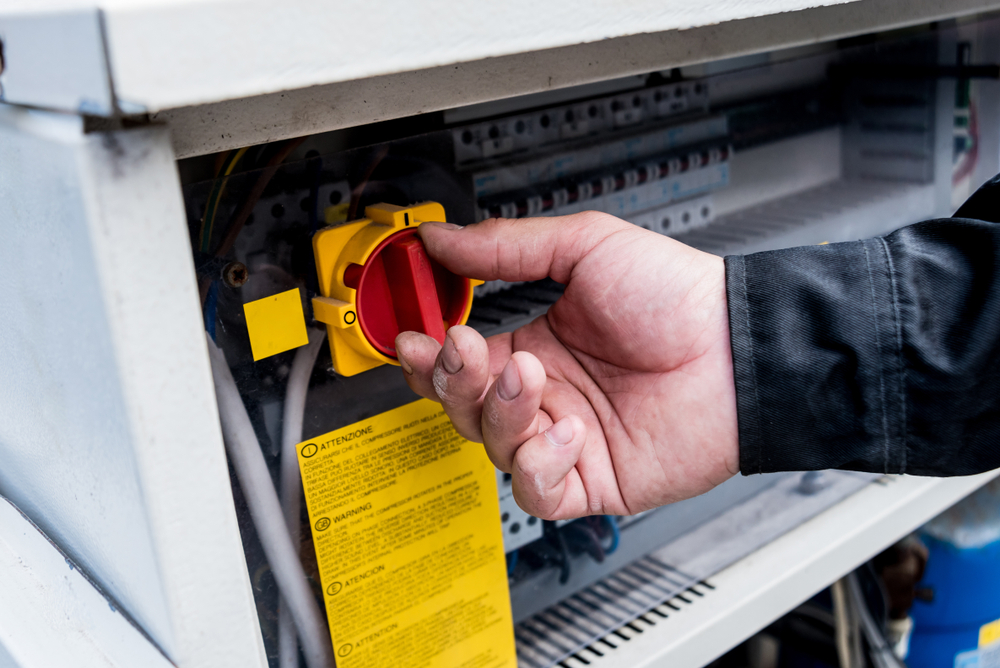
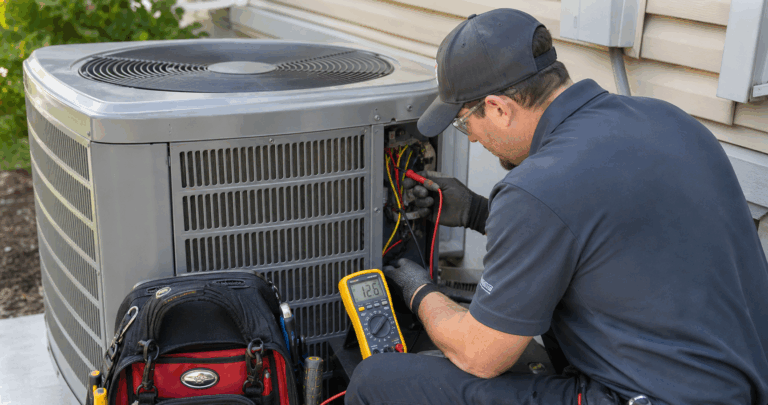
The technician opens the electrical panel on the outdoor condensing unit and works through the following:
Capacitors. A capacitor is a part that helps motors start and run properly. It gives the motor a boost and helps keep it operating smoothly. If a capacitor gets weak, the fan motor or compressor may have trouble starting, may overheat, or may draw the wrong amount of current. The technician tests capacitor microfarad values with a meter and compares them to rated specifications. Capacitors should be within 5 to 10% of their rated value. A capacitor that’s drifted outside that range is one that’s likely to fail under load — specifically, on the hottest days of a Maryland summer when the system is running hardest. Las Vegas AC RepairThe Cooling Co
Contactor. The contactor works like a heavy-duty switch. When the thermostat asks for cooling, the contactor closes and sends power to the outdoor unit. The contactor can become pitted, burned, or stuck over time. If that happens, the outdoor unit may not turn on correctly. A bad contactor can also cause short cycling, which is hard on the compressor. The technician inspects the contactor visually for pitting or burning and tests its operation. Las Vegas AC Repair
Electrical connections and wiring. The technician inspects and tightens all electrical connections and verifies proper amperage draw on motors. Loose connections cause resistance, resistance causes heat, and heat accelerates wear on every component downstream. This step is fast but meaningful — a connection that’s worked loose over a year of vibration can be re-tightened in seconds before it becomes a failure point. The Cooling Co
Motor amp draws. The technician checks amp draws on the indoor motor, the outdoor fan motor, and the compressor. Amperage readings that are higher than spec indicate a motor working harder than it should — a sign of wear, restriction, or an impending failure. Readings outside acceptable range trigger a closer look at the component drawing too much current. Fire & Ice
Refrigerant System Check
This is the step that legally requires a licensed, EPA-certified technician — and one of the most technically important things that happens during the visit.
Your air conditioner doesn’t consume refrigerant the way a car consumes fuel. The refrigerant circulates through the system. Low levels usually indicate a leak that needs repair. A system that’s low on charge is a system with a leak somewhere — and adding refrigerant without finding the leak just delays the problem while the system continues operating below efficiency. Irbishvac
The technician measures refrigerant pressures at both the low and high sides, calculates superheat and subcooling to verify proper charge, inspects refrigerant lines for leaks or damage, checks line insulation condition, and looks for oily residue that indicates leaks. inAir Heating & Air
Superheat and subcooling are the precision measurements that confirm whether the system is properly charged — not just whether refrigerant is present, but whether the refrigerant circuit is performing at specification. In spring, technicians focus on refrigerant circuit performance including target superheat and subcooling, condenser cleanliness, and airflow across the evaporator. A system that’s even slightly undercharged runs less efficiently and puts additional stress on the compressor. White Mechanical
The refrigerant lines running between the indoor and outdoor units are also inspected. The insulation on the suction line — the larger copper line that carries cold refrigerant back to the compressor — degrades over time, reducing efficiency and potentially causing condensation problems. Damaged insulation is replaced during the visit.
Condenser Coil Cleaning (Outdoor Unit)
The condenser coil is the large coil wrapped around the exterior of the outdoor unit. Its job is to release the heat pulled from your home into the outdoor air. When it’s coated with dirt, pollen, grass clippings, and debris — which happens in every Maryland spring between the pollen season and normal outdoor accumulation — that heat transfer is impaired. Dirty coils are silent efficiency killers. When dust, pollen, and debris coat the condenser coil, heat transfer drops and the system has to run significantly longer to reach the set temperature. Filterbuy
The technician rinses the condenser coil with water, working from the inside out to push debris away from the fins rather than further into them, and inspects the fins for damage or bending that restricts airflow. Bent fins can be straightened with a fin comb — a small adjustment that restores airflow and efficiency.
The base pan of the unit is also cleared of leaves, seed pods, and debris. The outdoor fan blade is inspected for balance and cleanliness.
Evaporator Coil Inspection (Indoor Unit)
The evaporator coil is inside your air handler — it’s the coil that gets cold and pulls heat and moisture out of the air passing over it. Unlike the condenser coil, the evaporator isn’t rinsed during a standard tune-up because it’s enclosed in the air handler cabinet. The technician inspects it for visible debris accumulation, signs of moisture problems, or ice formation, and notes condition for the homeowner.
If the evaporator coil requires deeper cleaning — which becomes necessary every few years depending on filter maintenance — that’s typically scheduled as a separate, more involved service.
Condensate Drain Line Clearing
A clogged condensate drain is the number one cause of water damage from HVAC systems. During a tune-up, the drain line should be flushed to prevent blockages that can lead to water backup, mold growth, and even system shutdowns triggered by the safety float switch. Filterbuy
In Maryland’s summer, your AC is pulling significant moisture out of the air — this is the humidity control function discussed in our post on AC system types. That moisture collects on the evaporator coil and drains through a condensate line to a floor drain or outdoors. Algae grows in that drain line over the course of a season. Left uncleaned, it blocks the line, water backs up into the drain pan, and the safety float switch shuts the system off to prevent overflow — often discovered when the house is 85 degrees and the system isn’t running.
The technician flushes the condensate drain line with a cleaning solution or compressed air, clearing the algae growth and confirming flow.
Blower Motor and Indoor Airflow
The blower motor is the heart of your airflow. A tune-up should include checking the motor’s amp draw, lubricating bearings if applicable, and inspecting the fan blade for balance and cleanliness. Filterbuy
The blower wheel — the fan inside the air handler that pulls return air across the evaporator coil and pushes conditioned air through the supply ducts — accumulates dust and debris over time. A dirty blower wheel is unbalanced and moves less air than a clean one. Reduced airflow across the evaporator coil means reduced cooling capacity and reduced dehumidification — the exact problem that makes Maryland summers feel worse than they should.
The technician inspects the blower wheel condition, notes any significant buildup for the homeowner, and lubricates the motor bearings on systems that have serviceable bearing ports.
Temperature Split Measurement
This is the performance verification step — the point where the technician confirms the system is actually doing what it’s supposed to do rather than just running.
The technician checks the return and supply temperatures inside, and checks conditions outside to make sure everything is within specs. The difference between the temperature of air entering the return duct and air leaving the supply duct — called the temperature split or delta T — should fall within a manufacturer-specified range, typically between 16 and 22 degrees Fahrenheit depending on humidity conditions. A split that’s too narrow means the system isn’t cooling adequately. A split that’s too wide can indicate airflow problems. Fire & Ice
This measurement is the system-level confirmation that everything the technician has checked, cleaned, and adjusted is resulting in an AC that’s actually performing correctly.
The Final Report
A complete tune-up concludes with the technician communicating findings to the homeowner — not just “everything looks good” but specific notes on component condition, any items that are approaching the end of their service life, and a clear distinction between what was found and addressed during the visit and what may need attention before next season.
Quality HVAC tune-up work comes with numbers, not just a thumbs up. If a technician can’t tell you the refrigerant pressures they recorded, the capacitor values they measured, or the temperature split they confirmed, that’s a sign the visit wasn’t as thorough as it should have been. inAir Heating & Air
What a Tune-Up Is Not
A tune-up is not a repair visit. If a technician finds a failing capacitor, a refrigerant leak, or a contactor that needs replacement, those repairs are typically quoted and approved separately — they’re not automatically included in the maintenance visit cost. The value of the tune-up is identifying those issues while they’re still minor and addressable on a planned basis, rather than discovering them when they cause a complete system failure in July.
A tune-up is also not a replacement for addressing problems that a homeowner has already noticed. If your system is blowing warm air, short cycling, or making unusual noises, those are symptoms of an existing problem that needs a diagnostic service call — not a maintenance visit.
Why Annual Tune-Ups Matter for Maryland Homes
Neglected HVAC systems fall prey to more frequent breakdowns, higher utility costs, comfort problems, shorter lifespan, and in the case of gas systems, potential safety hazards including carbon monoxide exposure from a cracked heat exchanger. Allen Service
For central Maryland specifically, annual AC maintenance before summer and furnace maintenance before winter is the right cadence. The humidity load on a central Maryland AC system from June through September is significant — and a system that enters that season with dirty coils, a sluggish blower, a marginal capacitor, and a partially blocked condensate drain is a system that’s going to struggle all summer and likely fail before fall.
The tune-up is the difference between a system that handles a Maryland July and one that doesn’t.
Schedule Your HVAC Tune-Up with Scardina Home Services
Scardina Home Services provides HVAC maintenance for homeowners throughout central Maryland — including Glen Burnie, Severn, Crofton, Gambrills, Odenton, Pasadena, Annapolis, Severna Park, Arnold, and the surrounding communities in Anne Arundel County.
Our technicians walk through the complete checklist on every visit, give you specific findings rather than generic reassurances, and are straight with you about what they find — whether it’s good news or a conversation about a part that needs attention.
Call us at 410.782.0937 or request your tune-up online.
Scardina Home Services | 8082 Veterans Highway, Millersville, MD 21108 | 410.782.0937 | scardinahome.com/services/hvac
Frequently Asked Questions
How long should a proper HVAC tune-up take?
A thorough tune-up for a standard single-system home typically runs between one and one and a half hours. If the system hasn’t been serviced in a few years, the condenser coil needs significant cleaning, or the technician finds something that warrants a closer look, it can run longer. What it should never be is 30 to 45 minutes. A visit that wraps up in half an hour almost certainly skipped meaningful steps — refrigerant pressure measurement alone takes five to ten minutes after the system has had time to stabilize, and that’s before accounting for coil cleaning, electrical testing, and condensate drain flushing. If a technician is done in 30 minutes, ask specifically what they measured and what they found. The answer will tell you a lot.
My system has been running fine all summer. Do I still need a tune-up?
Yes — and this is the most common reason homeowners skip maintenance. “Running fine” means the system is cooling the house to the thermostat setpoint. It doesn’t mean the capacitor is within spec, the refrigerant charge is correct, the condensate drain is clear, or the contactor isn’t pitting. All of those things can be degrading quietly while the system continues to cool adequately — right up until one of them fails on the hottest day of the year. A capacitor that’s drifted to 80% of its rated value will still start the compressor reliably in mild weather. Under the heat stress of a Maryland August, it may not. The tune-up catches that before August.
What’s the difference between a tune-up and a repair call?
A tune-up is scheduled preventive maintenance performed on a system that’s operating. It covers inspection, cleaning, testing, and adjustment — and it may surface findings that lead to a repair recommendation, but the repair itself is a separate conversation and a separate cost. A repair call is scheduled because something has already failed or is actively not working correctly. The distinction matters because the technician’s mindset and toolkit differ between the two. A tune-up technician is systematically working through a checklist looking for what’s developing. A repair technician is diagnosing a specific symptom. If your system is blowing warm air, short cycling, or making unusual noises, call for a diagnostic service call — not a maintenance visit.
Will the technician add refrigerant during the tune-up if it’s low?
This depends on what they find. If pressure measurements indicate the system is undercharged, the technician will inform you and discuss the options — but simply adding refrigerant without finding the source of the loss is not the right approach. Your AC doesn’t consume refrigerant the way a car consumes fuel. If the charge is low, there’s a leak somewhere in the system. Adding refrigerant without locating and repairing the leak means you’ll be in the same situation next season, except the leak will have continued. A reputable technician will identify the low charge, recommend a leak search, and give you the full picture before proceeding. Refrigerant and leak repair are typically quoted separately from the maintenance visit itself.
Does skipping one year of maintenance really make a noticeable difference?
It depends on the age and condition of the system, but yes — it compounds. Dust accumulates on the evaporator coil every season. Algae grows in the condensate drain line. Electrical connections vibrate slightly loose over thousands of operating cycles. Capacitors drift gradually toward the bottom of their acceptable range. None of these things cause immediate failure in the first year they’re missed. But a system that goes two or three years without maintenance enters each season slightly more degraded than the last, with less margin before something actually fails. The homeowners we hear from most often after an emergency repair call are the ones who mention they skipped maintenance for a few years because the system seemed fine.
Can I do any of this myself?
The one thing homeowners can and should do themselves is change the air filter on schedule — every one to three months depending on your household and filter type. That single habit has more impact on system health and efficiency than almost anything else. Beyond that, the steps involved in a proper tune-up require specialized tools and licensing: refrigerant handling requires EPA certification, electrical testing requires a multimeter and training to interpret readings safely, and coil cleaning requires the right chemical solutions and technique to avoid damaging the fins. The DIY line is the filter. Everything else is a licensed technician’s job.
What does the technician actually leave me with at the end of the visit?
You should receive a written record of what was inspected, what was found, what was done, and what — if anything — the technician recommends for follow-up. Specific numbers matter here: the refrigerant pressures recorded, the capacitor values tested, the temperature split measured, the amp draws checked. A receipt that says “system inspected and serviced” with no specifics is not documentation of a thorough visit. At Scardina, we give homeowners a clear account of what we found in their specific system — not a generic checklist with boxes ticked. If something needs attention before next season, we tell you plainly, explain why, and let you decide how to proceed.
Does regular maintenance actually extend the life of my system?
Yes, and meaningfully so. A well-maintained HVAC system routinely reaches 15 to 20 years of service life. A neglected system tends to fail significantly earlier — often in the 10 to 12 year range — because small, compounding issues cause components to work harder than they should. The compressor in particular is expensive enough to replace that early failure is a major financial event. Most compressor failures trace back to one of a small set of causes — low refrigerant charge, electrical stress from a degraded capacitor, or restricted airflow from a dirty coil — all of which a properly conducted annual tune-up identifies and addresses. The maintenance cost over a system’s life is a fraction of a premature replacement.
Should I schedule separate tune-ups for my AC and furnace, or can it be done in one visit?
They’re best done as two separate visits — one in spring before cooling season and one in fall before heating season. The reason is that the tasks are different. Spring maintenance is focused on the cooling system: coil cleaning, refrigerant charge, electrical components, condensate drain, and cooling performance verification. Fall maintenance shifts to the heating side: heat exchanger inspection, burner cleaning, igniter and flame sensor testing, gas pressure verification, and carbon monoxide safety checks. Doing both in a single visit means either rushing through both or spending most of the day at your home. Two seasonal visits of appropriate length is the right cadence — and it means your system is evaluated fresh before each season rather than once a year at an arbitrary time.
Ready to schedule your pre-summer tune-up? Call us at 410.782.0937 or book online at scardinahome.com/estimate-service.