
If you’ve noticed white crusty buildup around your faucets, a rumbling water heater, or sluggish water pressure throughout your home, hard water may be quietly working against you. For homeowners across central Maryland — from Anne Arundel County to Baltimore and Howard County — hard water isn’t just a nuisance. It’s an ongoing threat to your plumbing system, your water heater, and your wallet.
In this guide, we’ll break down exactly what hard water is, why central Maryland is particularly prone to it, and what it’s doing to your home right now.
What Is Hard Water, and Why Does It Matter?
Hard water is water that contains elevated concentrations of dissolved minerals — primarily calcium and magnesium. These ions are naturally dissolved into groundwater as it comes in contact with soluble limestone and other rocks and minerals. University of Maryland Extension The more minerals present, the “harder” the water.
Water hardness is typically reported in milligrams per liter (mg/L) of calcium carbonate, and is classified as soft (0–60 mg/L), moderately hard (61–120 mg/L), hard (121–180 mg/L), and very hard (greater than 180 mg/L). Maryland Geological Survey
While consuming hard water does not present a health risk, it may cause aesthetic or nuisance problems such as bitter taste or mineral deposits on dishes, utensils, and plumbing fixtures — and it can reduce the efficiency and life span of water heaters. University of Maryland Extension
That last point is the one that hits homeowners hardest — literally in their energy bills and repair costs.
Why Central Maryland Has a Hard Water Problem
Central Maryland’s hard water situation isn’t random. It’s written into the geology of the region.
Maryland is divided by the Fall Line, a boundary that separates the hard crystalline rocks of the Piedmont Plateau from the softer sedimentary deposits of the Coastal Plain. As groundwater travels through these distinct layers of the earth, it dissolves naturally occurring minerals such as calcium and magnesium. In the Piedmont region, which includes much of Central Maryland, water interacts with metamorphic and igneous rocks that have been fractured over millions of years. Callstaton
The Frederick Valley in particular is underlain by significant limestone deposits, which are a primary source of high calcium carbonate levels in the groundwater. Homes located along the Fall Line often experience fluctuating mineral levels as the water source shifts between rock types. Callstaton
What does this mean in terms of actual numbers? Baltimore’s water hardness averages around 120 PPM — placing it squarely in the moderately hard category, where scale buildup on fixtures, spotty dishes, and dry skin and hair are common complaints. Waterhardness
Most of central Maryland reports moderate to hard water according to Consumer Confidence Report (CCR) data, and hardness levels can vary significantly by county and even by neighborhood. Clearwavewater If your home draws from a private well, levels can be even higher depending on what your groundwater passes through beneath your property.
What Hard Water Does to Your Pipes
The damage hard water causes to your pipes is slow, invisible, and cumulative — which is exactly what makes it so dangerous.
Scale Buildup and Restricted Water Flow
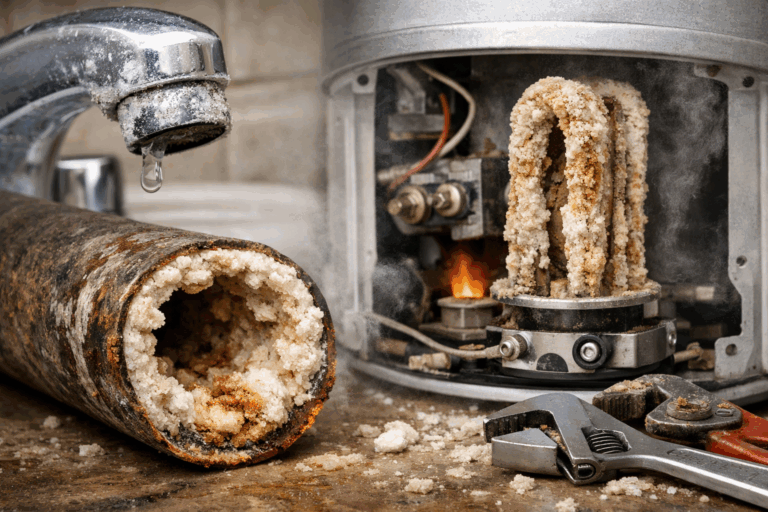
Hard water contains elevated levels of calcium and magnesium that slowly accumulate inside plumbing. These minerals form scale — a hard, chalky buildup that clings to pipe walls and narrows water pathways. American Water
As hard water flows through pipes, calcium and magnesium deposits slowly accumulate along the interior walls. This buildup narrows the pipe diameter, restricting water flow and reducing water pressure throughout the home. Home Pouch If you’ve noticed that your shower pressure has dropped or water takes longer to fill a pot, scale buildup inside your pipes could be a contributing factor.
When hard water is heated, some of the water evaporates — even inside pipework — causing the minerals in the water to solidify into scale, which can accumulate and restrict water flow. Aqua Clear Water Systems
Corrosion and Pipe Damage
Scale doesn’t just slow your water down — it can actually accelerate the deterioration of your pipes from the inside out.
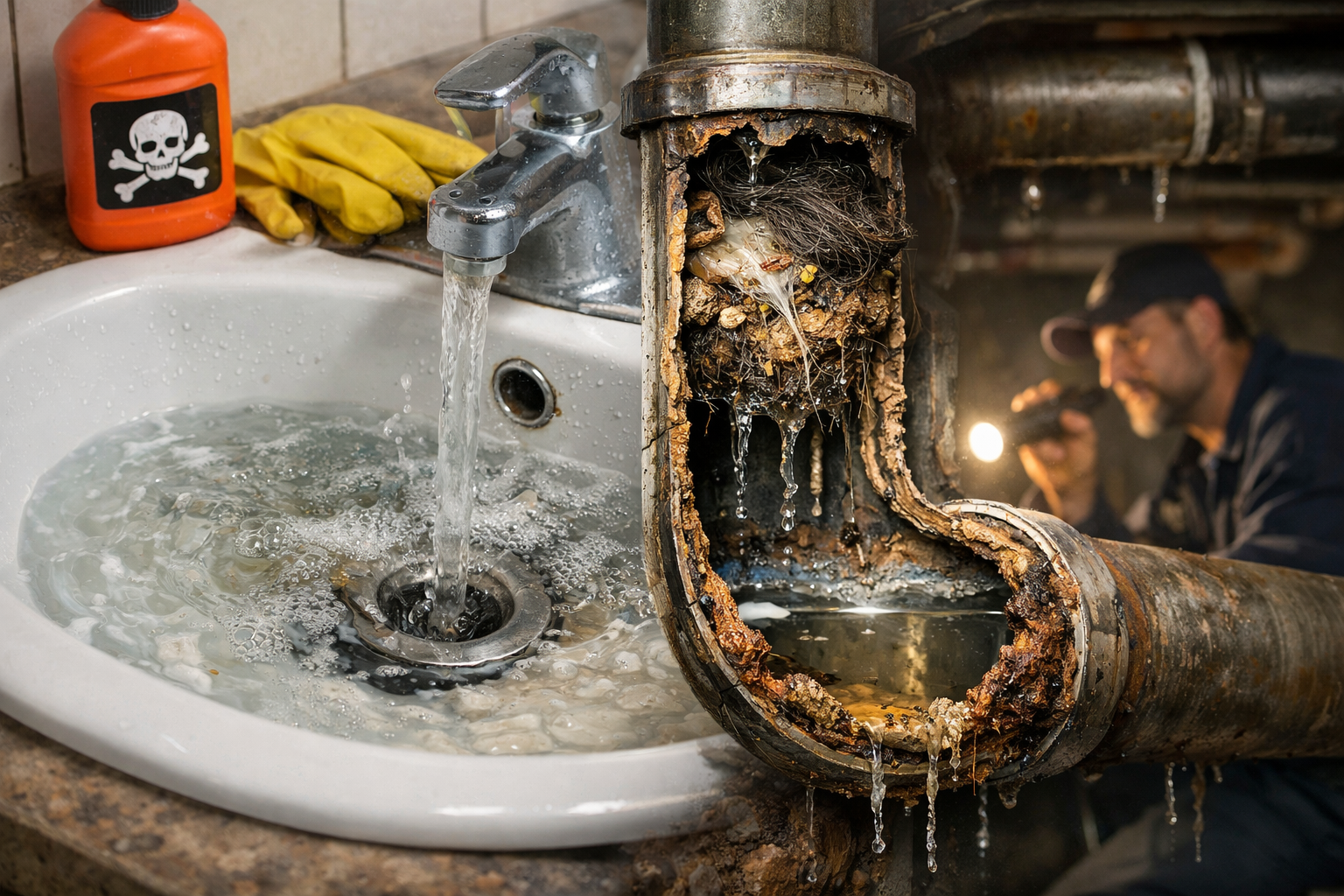
The mineral deposits create a rough, uneven surface inside plumbing and cause chemical changes in the water that contribute to deterioration. Over time, this process weakens the pipes and makes them more prone to leaks and cracks. The more scale accumulates, the higher the likelihood of your pipes corroding from the inside out. Dewolfecontracting
Inside the plumbing system, scale reduces water flow, disrupts pressure, and creates conditions that allow corrosion to take hold. Older plumbing materials like galvanized steel and copper are especially vulnerable. Once corrosion begins, the pipe surface weakens, increasing the risk of pinhole leaks and joint failure. American Water
This is especially relevant for central Maryland homeowners living in older homes — many of which still have galvanized or copper pipes that are years into their lifespan.
How Long Before Damage Becomes Serious?
Under normal circumstances, your household’s plumbing should last for 50 years, but frequent clogs or corrosion caused by hard water buildup can shorten this lifespan significantly. AHS The good news is that it doesn’t happen overnight. The bad news is that if your home already has aging pipes and you’ve never addressed hard water, the damage may already be well underway.
Signs to watch for include:
- White or chalky crust around faucets and showerheads
- Reduced water pressure throughout the home
- Slow drains with no obvious blockage
- Rust-colored or discolored water
- Unusually high water bills
What Hard Water Does to Your Water Heater
Of all the places hard water causes damage in your home, your water heater takes the biggest hit. Heat accelerates mineral crystallization, turning your tank into a prime target for scale accumulation.
How Scale Forms Inside Your Tank
Mineral buildup primarily involves the accumulation of calcium, magnesium, and other deposits inside your water heater. This buildup forms a hard, chalky substance known as limescale. Scale formation occurs when heated hard water releases its dissolved minerals, causing them to crystallize on heated surfaces. Over time, these crystals aggregate, forming thick layers of limescale that reduce efficiency and increase energy consumption. One Call Plumbing
In a tank-style gas water heater, scale accumulates at the bottom of the tank where the burner heat is most intense. That layer of mineral crust acts as insulation between the burner and the water, forcing the burner to run longer and hotter to transfer the same amount of heat. Water Quality Hub
The Energy Cost Is Real
The efficiency hit from scale buildup translates directly to dollars on your monthly utility bill.
Even just 1/4 inch of scale can increase energy consumption by up to 25%, which adds up fast on your monthly utility bill. Water Quality Hub The average U.S. household spends roughly $400–$600 per year heating water — so a 25% efficiency reduction adds $100–$150 annually to that number, every single year.
According to studies, water heaters affected by hard water can use up to 25% more energy than those operating with soft water. This increase in energy usage can have a significant impact on household expenses over time. Haguequalitywaterkc
Your Water Heater Will Die Younger
Beyond the energy costs, hard water simply kills water heaters faster.
Generally, a hot water heater should last between 8–12 years. Depending on how hard your water is, you can expect your water heater to wear out roughly two years sooner than it would have with soft water. Philbarnettplumbing
In cases of very hard water, the impact is dramatically worse. Research from the Water Quality Research Foundation found that water heaters in very hard water areas without any treatment have an average lifespan of just 6.5 years — compared to 11–13 years in soft water conditions. That’s effectively replacing your water heater twice as often. Water Quality Hub
Mineral buildup can cause the heating element to overheat and fail. Additionally, sediment can lead to corrosion and leaks inside the tank, necessitating frequent repairs. One Call Plumbing
Warning Signs Your Water Heater Is Suffering
Don’t wait for a cold shower to tell you there’s a problem. Watch for these red flags:
- Rumbling, popping, or banging noises when the heater runs — this is sediment being disturbed at the bottom of the tank
- Running out of hot water faster than you used to
- Longer wait times for hot water to arrive at the tap
- Higher gas or electric bills with no change in household habits
- Visible rust or discoloration in your hot water
- The unit is 7+ years old and located in a hard water area
Protecting Your Home: Solutions That Work
The good news is that hard water damage is entirely preventable with the right approach.
Annual Water Heater Flushing
Flushing the water heater at least once a year helps remove the minerals that accumulate inside. If you have hard water, consider flushing your water heater every six months to keep buildup under control. Knightsplumbingllc This is a relatively simple maintenance task that can extend the life of your unit by years.
Anode Rod Inspection
Your water heater’s anode rod is a sacrificial metal rod designed to attract corrosion away from the tank walls. In hard water environments, it degrades faster. Having a plumber inspect and replace it regularly is one of the best low-cost ways to protect your investment.
Whole-Home Water Softener Installation
The most effective way to address high mineral levels in Maryland’s water is to install a whole-home water treatment system. Unlike portable filters or temporary fixes, these professional systems treat the water at the point of entry, ensuring that every fixture and appliance in your home is protected from the moment the water enters your property. Callstaton
The gold standard for treating hard water is a water softener that uses ion exchange technology. In this process, the hard water passes through a tank filled with specialized resin beads designed to attract and trap the calcium and magnesium ions, replacing them with a small amount of sodium or potassium ions. Callstaton
The return on investment is significant: homes with softened water see up to 40% lower water heater operating costs, meaning more money stays in your pocket instead of going to utility bills. Filtered water also helps appliances last significantly longer. Leaf Home
Professional Plumbing Inspection
If your home is more than 10–15 years old and you’ve never had your water hardness tested or your pipes inspected, now is the time. A licensed plumber can assess the interior condition of your plumbing, check your water heater for scale buildup, and recommend the right treatment system for your specific water chemistry.
The Bottom Line for Central Maryland Homeowners
Hard water is one of those silent home problems that doesn’t announce itself until the damage is done — a burst pipe, a failed water heater, or an unexpected spike in your utility bills. Central Maryland’s geology makes elevated mineral levels a reality for most homeowners in the region, and the longer it goes unaddressed, the more it costs.
The good news? With regular maintenance and the right water treatment system, you can protect your pipes, extend the life of your water heater, and keep your home running efficiently for years to come.
📞 Think Hard Water Might Be Affecting Your Home?
The team at Scardina Home Services has been serving central Maryland homeowners for decades. Whether you’re hearing strange noises from your water heater, dealing with low water pressure, or just want to know what’s really in your water — we can help.
Our licensed plumbers offer:
- Water heater inspection, flushing, and replacement
- Full plumbing system assessments
- Hard water damage diagnosis and repair
- Water softener installation and recommendations
Don’t wait for an emergency. Contact Scardina Home Services today to schedule a service call and protect your home from the hidden costs of hard water.
📱 Call Us: 410.782.0937 | 💻 Request Service Online
Serving Millersville, Annapolis, Baltimore, and communities throughout central Maryland.
Frequently Asked Questions
How do I know if I have hard water in my Maryland home?
The most common signs are white or chalky buildup around faucets and showerheads, spots on dishes and glasses after washing, soap that won’t lather well, dry skin and hair after showering, and reduced water pressure over time. The only way to know for certain is to have your water tested by a professional or use an at-home test kit.
Is hard water dangerous to drink?
No. Hard water is safe to consume. The calcium and magnesium that cause hardness are naturally occurring minerals and do not pose a health risk. The concern is entirely about what hard water does to your pipes, appliances, and fixtures over time.
How hard is the water in central Maryland specifically?
It varies by location, but most of central Maryland — including the Baltimore metro area and Anne Arundel County — falls in the moderately hard to hard range, typically between 100–150 PPM. Homes on private wells can see even higher levels depending on the local geology. The Piedmont Plateau and Frederick Valley areas are particularly prone to elevated mineral content due to their limestone and carbonate rock formations.
How often should I flush my water heater if I have hard water?
For homes with hard water, plumbing professionals recommend flushing your water heater every six months rather than the standard annual flush. This removes sediment and mineral buildup before it has a chance to harden and cause lasting damage to your tank or heating elements.
Will a water softener really extend the life of my water heater?
Yes — significantly. Research from the Water Quality Research Foundation found that untreated hard water can cut a water heater’s lifespan nearly in half compared to soft water conditions. Homes with softened water also see up to 40% lower water heating costs. A water softener is one of the highest-ROI investments a Maryland homeowner can make.
My water heater is making a rumbling noise. Is that a hard water problem?
Almost certainly. That rumbling or popping sound is caused by mineral sediment that has settled at the bottom of your tank. As the burner heats the water, it has to push heat through that layer of scale, causing the noise. It’s a sign your water heater needs to be flushed — and possibly inspected for more serious damage if it’s been going on for a while.
Can hard water damage newer PVC or PEX pipes?
Copper and galvanized steel pipes are the most vulnerable to hard water damage, but PVC and PEX pipes are not completely immune. While they resist corrosion better than metal pipes, scale can still accumulate inside them over time and restrict water flow. Hard water affects every fixture and appliance that water touches, regardless of pipe material.
How much does it cost to install a whole-home water softener in Maryland?
Costs vary based on home size, water hardness levels, and the type of system installed. A professional assessment is the best way to get an accurate quote for your specific situation. Contact Scardina Home Services at 410.782.0937 or request a service estimate online — we’ll evaluate your water and recommend the right solution for your home and budget.